Nazakat : Craft, Community, and the Quiet Power of Shared Vision
Mukesh Ji: The Creative Genius Behind Parvai’s Nazakat Collection
There are moments in the life of a craft studio when a collaboration becomes more than a meeting of skills. It becomes an unfolding of destinies, a crossing of paths that reveals new possibilities of beauty, and an affirmation of why a brand like Parvai exists in the first place.
Nazakat, in its essence, a word that carries within it delicacy, refinement, and grace, emerged exactly from such a moment. And at the centre of this unfolding stands Mukesh ji, a fine artist of rare mastery, whose imagination has breathed new life into the world of block-printed saris.
Nazakat is not just a collection of saris; it is the culmination of ideas, people, histories, techniques, and intentions converging into cloth. It is a tapestry not only of motifs and colours, but also of relationships, intuitions, shared tasks, and the invisible emotional labour that underpins craft. It is, in many ways, the story of what Parvai has always stood for.
The Artist and His Mind
To encounter the works of Mukesh ji is to recognise the presence of a rare artistic mind immediately, a mind intensely trained, deeply sensitive, deeply committed to expressive perfection. Educated at the Delhi College of Arts, he brings to cloth not merely design but a refined artistic discipline. This kind comes from years of absorbing principles of balance, rhythm, composition, negative space, and visual harmony.
In his hands, a sari is not simply a garment; it becomes a movable canvas.
A space where narrative can unfold, where emotion can breathe, where the sophistication of line, motif, and colour can interact with the wearer’s movement.
What distinguishes him most profoundly is his stencil-led approach.
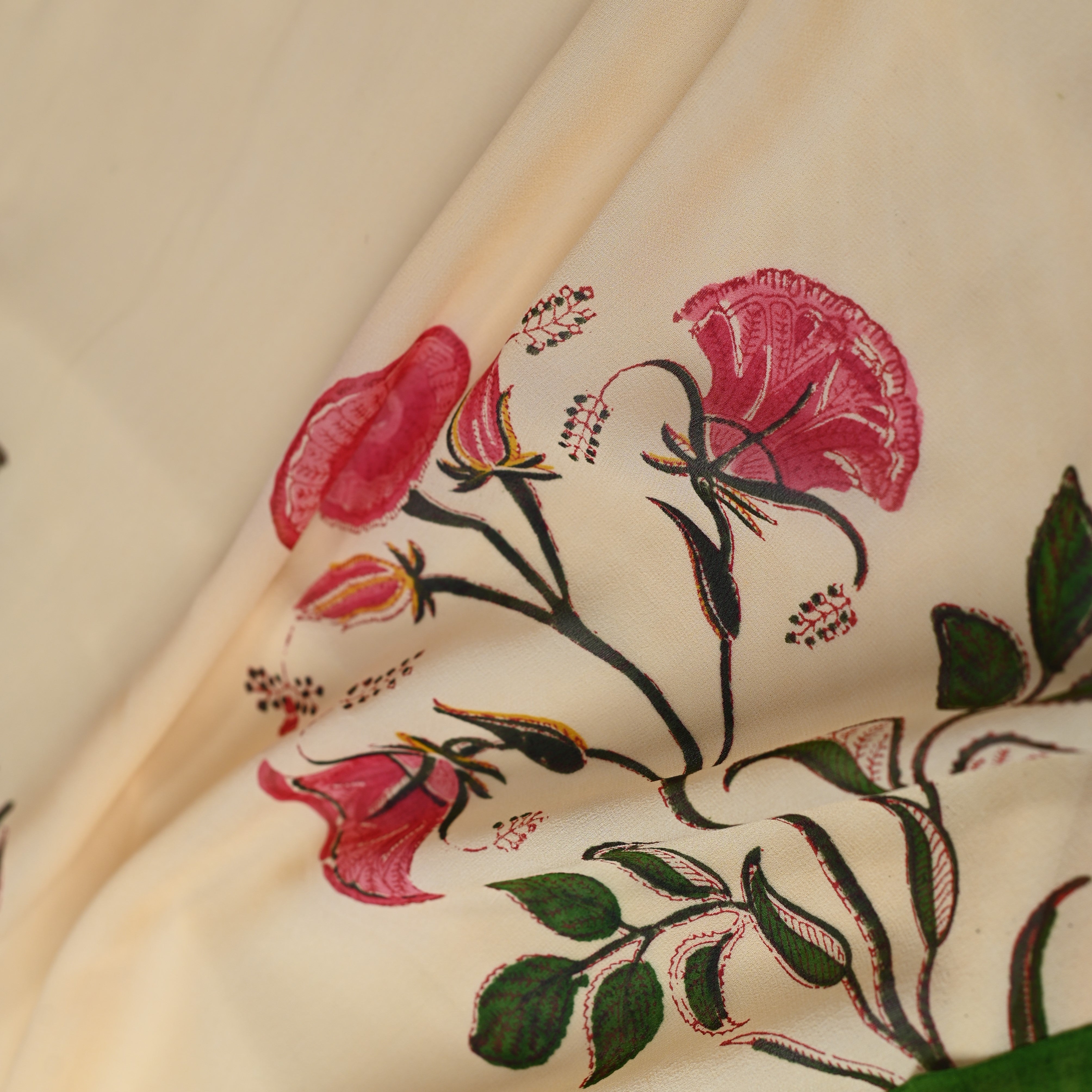
Before a motif becomes a block, it exists first in the world of his imagination. He sketches it by hand, creating a stencil that guides the block maker in carving a form that must reflect the nuances of his vision. This process, slow, precise, deeply personal, makes his designs impossible to imitate mechanically. Nothing is random. Nothing is approximate. Every line is intentional.
His devotion to heritage is equally evident in his mastery of discharge printing, one of the most complex, delicate, and technically demanding processes in traditional textile arts. It requires knowledge of chemistry, patience in timing, and absolute control over application. In the hands of most, discharge printing becomes utilitarian. In the hands of Mukesh ji, it becomes poetry.
The Canvas That Meets the Artist
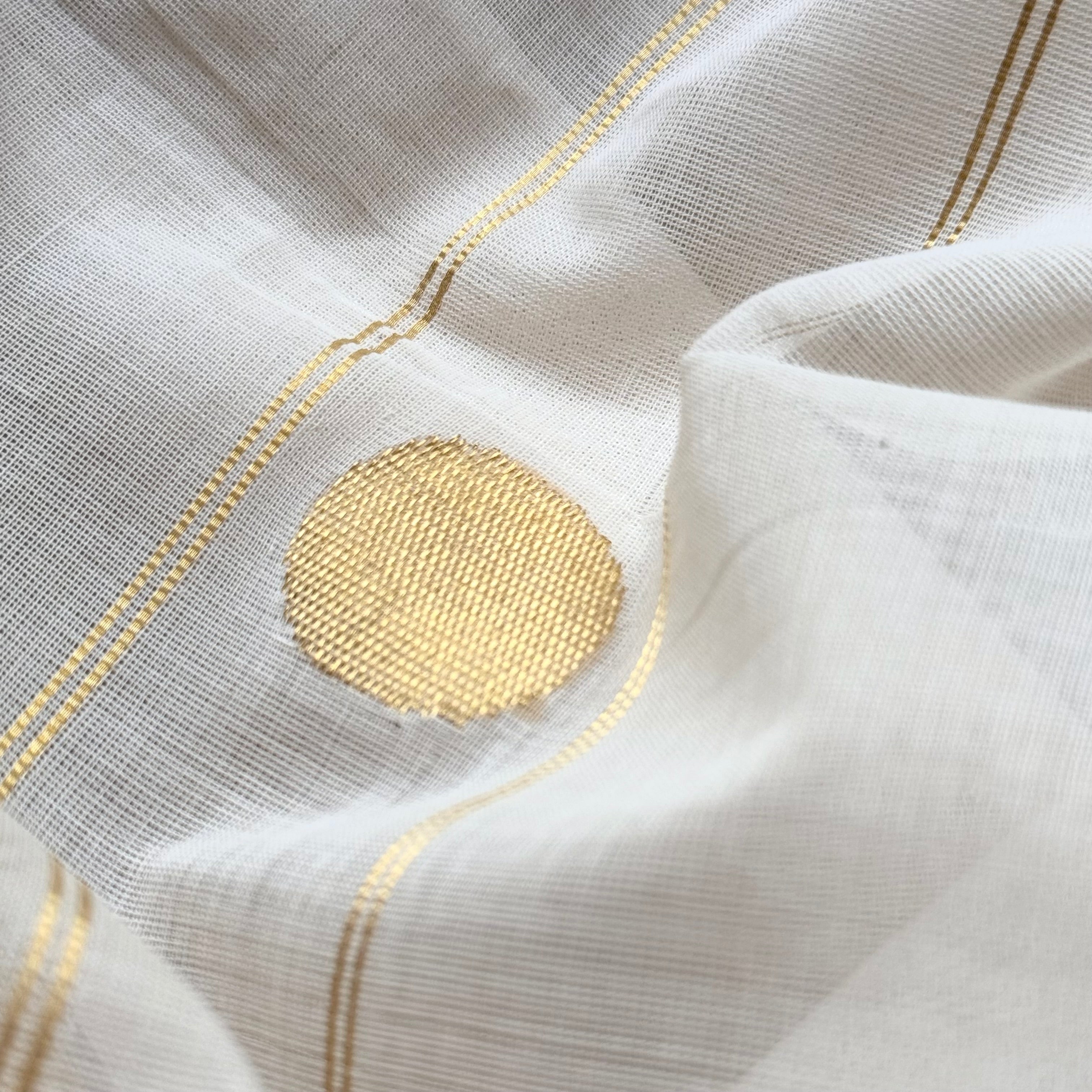
If his imagination forms the mind of Nazakat, Parvai’s base fabrics form its body. For this collaboration, Parvai chose to produce exclusive pure silk and cotton fabrics across its own looms in Kota, Maheshwar, Kanchipuram, and Kerala, each region known for its own history, rhythm, and textile vocabulary.

But creating these base fabrics is not a logistical step; it is a philosophical act.
Every decision from the sourcing of yarn, to the twist, the ply, the density of the warp, the softness of the weft, the choice of colour, and even the stage of pre-loom preparation is made with exquisite deliberation. Only natural, organic, and luxurious raw materials are selected. Loom settings are refined only after deep conversations with the weavers, explaining to them what the fabric is meant for, how it will travel, how it will be printed, washed, handled, and worn. Every artisan involved becomes aware that what they weave is not an end product, but the beginning of a longer creative journey. In this, the fabric is not a passive surface. It is an active partner in the artistic process.
When the cloth, woven with careful breath and hand, meets the imagination of an artist like Mukesh ji, the result is not simply a sari. It is a layered work of co-creation, a dialogue between loom and stencil, weaver and printer, tradition and innovation.
The Ten-Year Journey That Led to Nazakat
Parvai’s relationship with printed textiles did not begin with Nazakat.

It is rooted in a decade of working with printing communities across India, artists, colour masters, block carvers, and dyers who continue to keep the lineage of printmaking alive with reverence and skill. Over the years, Parvai has built saris with these masters that our patrons have worn not as mere garments but as inheritances, each carrying a story, a process, a person. Every sari, every print, every collaboration has taught Parvai something essential about patience, trust, and the holiness of the handmade. And through this journey emerged a more profound understanding:
Individuals do not build craft. It is built by ecosystems. Ecosystems of uncredited hands, quiet contributors, patient minds, and unseen labour.
Nazakat, therefore, is not a sudden idea. It is the natural continuation of ten years of relationships, learnings, and shared values, further shaped by the arrival of a remarkable collaborator.
The Patron Who Created the Bridge: J Prabha
In the world of craft, patrons are often described in narrow terms, as buyers, collectors, or occasional supporters. But Parvai has never embraced such limited definitions. Our patrons are not external to our story; they are threads woven into its very centre. They stand alongside us as partners, as companions in imagination, and as custodians of the values that guide our work.
Among these rare individuals, Prabha from Singapore stands in a realm entirely her own.

Her relationship with Parvai has always been one of emotional depth and intellectual generosity. As an artist herself, she approaches craft with a sensitivity that goes far beyond aesthetic appreciation. She seeks meaning, honours heritage, and holds an instinctive reverence for the hands that shape handmade work. She nurtures the ethos of excellence, encourages bold decisions, and brings an artistic presence that both affirms and expands Parvai’s aspirations.
It was Prabha who recognised the profound resonance between Parvai and Mukesh ji long before the connection materialised. What she saw was not simply a stylistic compatibility, but an ethical and philosophical alignment, a shared commitment to purity of process, integrity of intention, and the quiet, disciplined pursuit of beauty. Her introduction was made with care and foresight; it was not a suggestion but an offering, given with the understanding that something meaningful could be born from such a collaboration.
Through her insight and grace, two creative worlds found one another. Through her belief, a partnership took form, one that carries purpose, harmony, and a quiet sense of destiny. And through her encouragement, Nazakat began its journey from possibility into creation.
For all of this, Nazakat is dedicated to Prabha. She is not merely associated with this collection; she is part of its heartbeat, woven gently and powerfully into its making.
Parvai: A Community of Shared Vision
To truly understand Nazakat, one must first understand Parvai, what it is, what it has always aspired to be, and the human philosophy at its core.
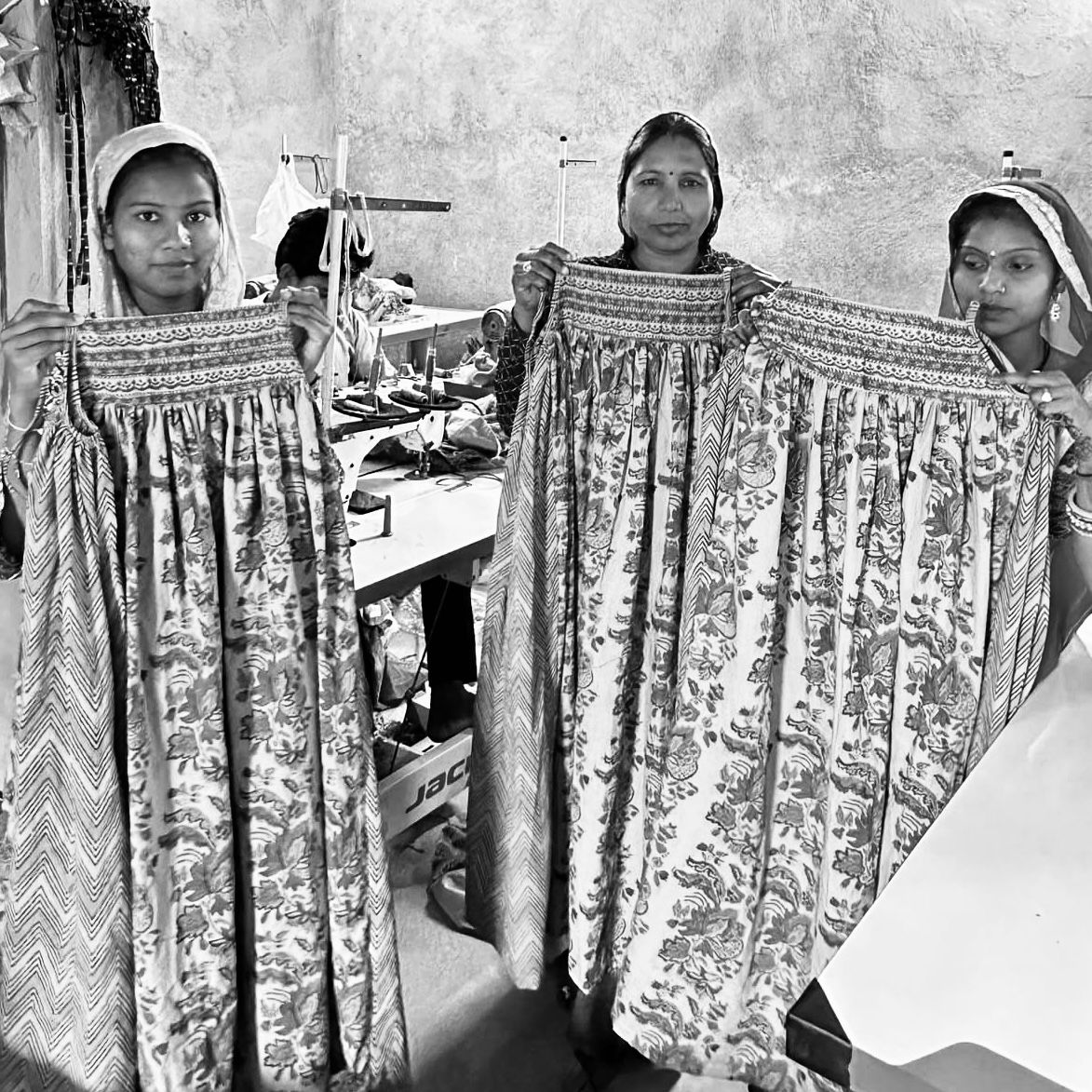
Parvai was never intended to be a conventional brand. From its inception, it has been a collective vision, shaped by people who believe deeply in contributing to something enduring and meaningful. It is a space sustained by a diverse community: the artists who bring imagination, the designers who shape form, the raw material sourcers who ensure authenticity, the weavers who translate intention into fabric, the printers who guide motifs into being, the zari and reed makers who hold ancestral skills, the adai makers who set the foundation of the loom, the dyers and finishers who refine the cloth, and the countless quiet hands who help every process unfold.
And, woven among them, are the patrons whose faith and involvement transform the work into a shared human endeavour.
In Parvai, every role carries dignity. Every contribution holds weight. Every individual becomes a stakeholder in the larger creative journey. We support one another, recognise brilliance wherever it exists, uplift those whose genius has long remained unacknowledged, and insist on fair wages and integrity of process. Ideas move freely, collaboration is natural, and the handmade is treated as an act of devotion rather than production.
Parvai is a collective heartbeat. It is a movement of people who dream with their hands and think with their hearts. Nazakat is an expression of this very spirit, the living result of humility, artistry, and community converging with shared purpose.
The Unfolding of Project Nazakat
As Project Nazakat takes shape, it becomes increasingly clear that this is not merely a collection of saris. It is a revelation of what is possible when craft is treated as sacred, and when each person involved brings intention, patience, and love into their role.
Each sari in Nazakat speaks its own quiet language. It carries the meditative lines drawn by Mukesh ji, who approaches each motif with discipline and sensitivity. It carries the rhythm of Parvai’s weavers, who prepare each base fabric with the awareness that these textiles will become canvases for further artistic expression. It carries the instinct and refinement of Sushma ji, who shapes and supports the creative process with intuitive grace. It carries the faith of Jaya Prabha, whose belief in this collaboration breathes strength and continuity into the work. It carries the heritage of traditional printing, the patience of hand labour, and the ethics of slow production, where nothing is rushed, and nothing is compromised.
Although its formal unveiling lies ahead, Nazakat already exists in the stencils drawn, the blocks carved, the yards of fabric lying in quiet readiness, the conversations exchanged across distances, and the dreams nurtured over months of imagining and making. It exists in the hands that prepare it and in the hearts of those who await it.
Nazakat has already come into being.
The unveiling will allow the world to see what has been living quietly in the shadows, a collection shaped by intention, protected by love, and refined through the brilliance of many minds working as one.


Written by Effie Thomas