When Intention Preceeds the Loom
Some stories begin at the loom. Others begin long before yarn is chosen, colours are discussed, or designs are imagined.
This story began with a date.
March 25th, 2022, the day Priya’s daughter received her acceptance into the University of North Carolina at Chapel Hill. In that moment, Priya instinctively knew that this milestone would one day be marked in cloth. Not hurriedly. Not symbolically. But with care, forethought, and intention.
As Priya later reflected,“For me, this was never about finding something to wear for a day. It was about marking a transition. I knew very early on that this moment deserved time, patience, and thought, and that the sari would come when it was ready.”
Graduation, in her mind, was never just an event to dress for. It was a moment of becoming a pause between what had been and what lay ahead. Something that deserved planning, dreaming, and foresight. When Priya eventually reached out to Parvai in 2024, her daughter’s graduation was still two years away. That distance mattered. It allowed the idea to breathe. It allowed conversations to unfold without urgency. And it aligned deeply with how we understand craft not as a product to be acquired, but as a process to be lived with.
Priya has been part of Parvai’s journey for years, not merely as a patron, but as a participant. She has commissioned, returned, waited, questioned, and trusted us with some of the most meaningful sarees we have made. She has had several of her sarees done with us her Parvaies, and that continuity of relationship is what made this project
 (Priya in some of Parvai’s best works over the years. On the left is a takli-spun, handwoven mulberry silk sari dyed with natural colours. On the right is a pure silk sari commissioned by her in Kanchipuram.)
At Parvai, this kind of patronage stays with us. Clothing approached not as impulse or indulgence, but as intention. Not as something to be purchased quickly, but something to be imagined, planned for, and grown into. This way of engaging with craft goes far beyond trends, visibility, or purchasing power. It comes from a deeper understanding, that what we choose to wear can hold memory, responsibility, and continuity.
Historically, handcrafted textiles were always created this way. Communities of artisans once worked closely with families, royalty and common households alike, creating textiles for specific moments in life: marriages, rites of passage, milestones, celebrations. Every piece existed for a reason. It carried purpose. It had a future imagined for it even before it was made.
This project quietly returned to that older rhythm. When conversations began, Priya did not arrive with a fixed design brief. She arrived with questions. What would feel right years later? What would age well? What would her daughter connect with? What would she herself feel proud to wear? What could one day be passed on?
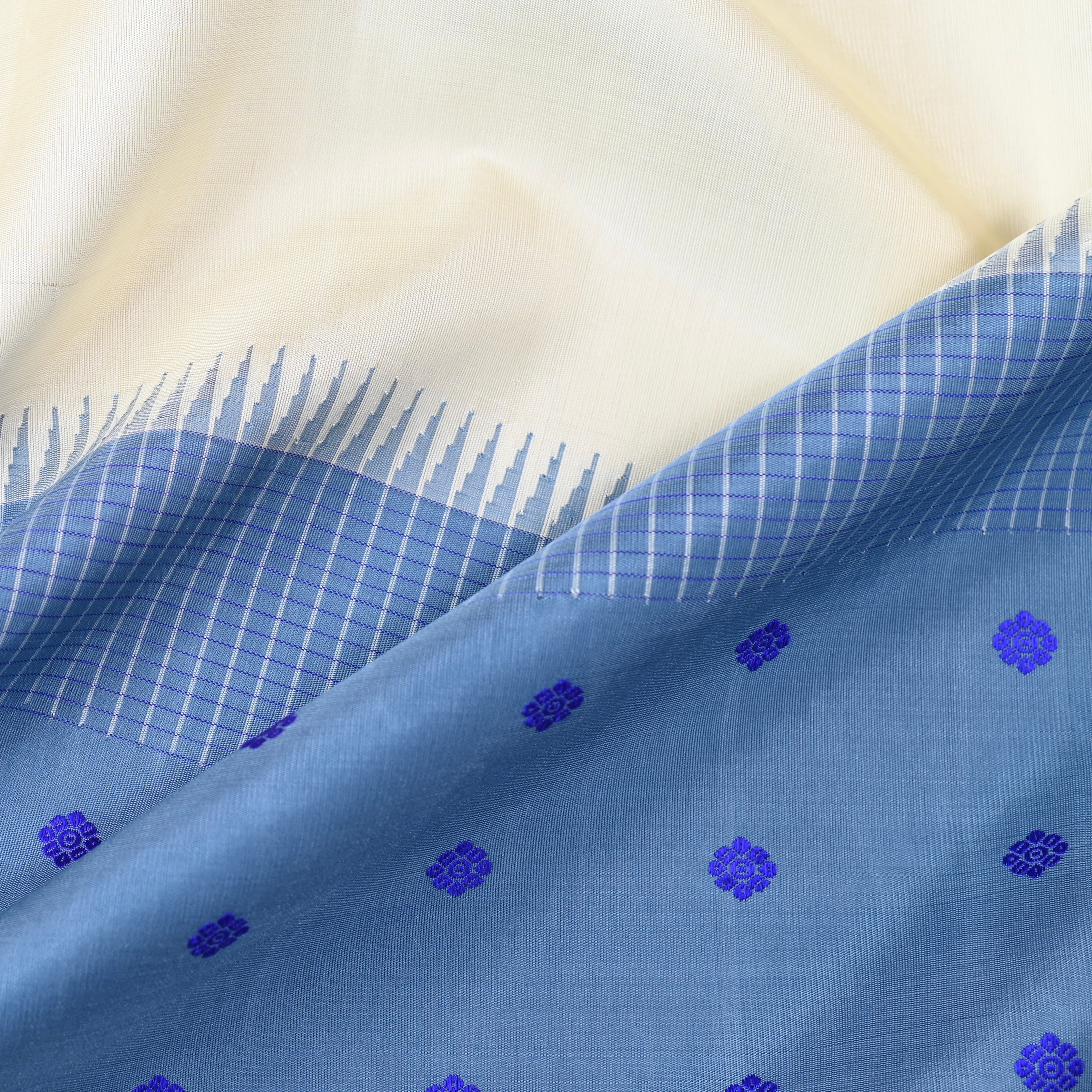
Colour became the first language of meaning. Blue and white, the University of North Carolina’s graduation colours, but not a literal or expected blue. Priya was drawn to a shade that could shift and respond, one that felt contemporary rather than fixed. A blue capable of holding more than one emotion. Paired with white, it spoke of aspiration, clarity, and becoming. “I didn’t want a fixed blue or a literal interpretation. I wanted a blue that could hold many emotions, pride, calm, anticipation, and a sense of becoming. When white entered the conversation, everything suddenly felt balanced.” Priya’s initial brief for us.
She explored several directions, Garhwal weaves, Tussar silks with embroidery, speaking to different sellers, considering multiple possibilities. But when her close friend Vidhya shared her own journey with Project Shashikala, something aligned.
When Priya witnessed that process, she was reminded of what Parvai truly offers not just sarees, but conversations. Custom colour. Custom design. And the patience to build something around a life moment.
d
Priya’s version of Shashikala in the making on an Parvai Loom in Kanchipuram
“What drew me back was not just the craft, but the conversation. There was no pressure to decide quickly. I felt I was allowed to think, change my mind, and let the idea evolve.”
The day after the Shashikala saris were completed, Priya sent a message that quietly changed the direction of the project. Why not create her daughter’s graduation sari using the Shashikala design language, reimagined through the colours of North Carolina?
It was not a suggestion rooted in trend or imitation. It was instinctive. Two journeys, one holding the memories of the past, the other carrying dreams into the future, had found a natural meeting point.
As Vidhya reflected, “Shashikala began as a way to hold on to my mother’s memory, but I realised something powerful when Priya spoke about using the design for her daughter. A design does not belong to one moment alone, it can travel, evolve, and find new meaning.”
What followed was not replication, but translation. A pattern once worn by a mother was reimagined to mark a daughter’s becoming. Layers of blue emerged, including a deeper shade Priya had not initially noticed, but which later revealed its importance in grounding the composition. Nothing felt decorative for its own sake. Nothing was added to impress. Every decision was held, considered, and intentional.
One conscious change was made to the body motif. Instead of Neelavattam, an auspicious eight-petal, diamond-shaped floral motif was introduced, chosen for its symbolism of balance, blessing, and forward movement. This sari was about progress. About the future. About standing at a threshold.
The colour challenge was resolved through structure rather than excess. Ganga borders were designed with fine saw-tooth korvai. The upper and lower borders carried extra-weft motifs in two colours — one in white, echoing the body, and the other in the deeper institutional blue, held deliberately at the edge. In this way, all the University of North Carolina colours found their place, not competing, but conversing.
 The pallu brought the composition together. Layered blue stripes moved from soft Carolina blue to the deeper contrast shade, quietly echoing academic regalia, order, and progression, without becoming literal. Throughout the journey, one principle guided us. This was a project that did not need embellishment through language. At Parvai, we consciously try not to over-romanticise simply and beautifully made things with extraordinary words or complicated explanations. We simplify. We speak in the language of the artist, and that language is simple.
Yes, this sari holds immense value, in the integrity of its raw materials, the discipline of its craftsmanship, the precision of its weaving, and the strength of its aesthetics. But in this project, all of that is gently overshadowed by something far more powerful: the intent and purpose that drove its creation.
Today, Priya’s daughter is pursuing pre-med, majoring in public health and biology. Where that path will lead remains open, as it should. This sari was never about predicting outcomes or celebrating achievement alone. It was about acknowledging a moment, and the faith that accompanies it.
As Vidhya observed,
“What moved me most was seeing how naturally the past and the future could coexist. One sari carried memory; the other carried possibility. Neither overshadowed the other, they simply held space

(Vidhya & Priya)
This sari will live on to tell many stories. Of two friends whose journeys intertwined. Of an inspired mother deeply invested in supporting artisanal work through conscious patronage. Of a daughter, her dreams, her becoming, and the unwritten future ahead of her.
Perhaps most remarkably, it tells a story of connection across distance, of how an intention born across the seas in California found its way into the narrow lanes of Kanchipuram, into a loom set up in a small hamlet, where Weaver Mariappan and his team of five women weavers and two helpers translated that intention into silk, thread, and time over fifty-eight days. It connects people, places, time, emotions, and memory. It connects the past to the future not loudly, but with quiet certainty. As one shared thought lingers,
“When a sari is imagined with intent, it stops being an object. It becomes something you grow into, and something that grows with you.”
This sari is not merely a garment. It is intent made visible. It is memory in the making. It is craft, carried forward.
What This Project Teaches Us About Building Value Through Craft

This sari was never just a purchase.It was a process, of planning, dreaming, patience, and intent.
For patrons who wish to build deeper value around what they choose to buy and live with, this project offers a few quiet yet powerful lessons.
1. Begin with Intention, Not Urgency
The value of this sari began nearly two years before it was woven. It started with a thought, ‘What do I want this to mean?’ When a purchase is anchored in intent rather than immediacy, it gains depth long before money is exchanged. Intent gives direction to design, clarity to decisions, and purpose to the final outcome.
2. Allow Time to Be Part of the Process
Time was not treated as a constraint, but as a collaborator. Ideas were allowed to evolve, settle, and return with greater clarity. True craft thrives when it is not rushed, when both patron and maker have the space to reflect, refine, and align.
3. Dream Before You Design
This project was shaped by imagination long before technical decisions were made. Dreaming creates emotional investment. It allows a piece to carry meaning beyond form, ensuring that what is created resonates deeply with the person it is meant for.
4. Plan and Create Space for the Purchase
Value is built when a patron consciously prepares for a piece, emotionally and financially. This may involve saving, prioritising, or setting aside resources over time. When funds are created intentionally, the purchase becomes an act of commitment rather than consumption.
5. Participate, Don’t Just Purchase
The patron was not a passive recipient but an active participant, questioning, reflecting, and shaping the journey. When patrons engage with the process, they become co-creators. This shared ownership deepens the relationship with the final piece.
6. Honour Craft Through Conscious Patronage
To honour craft is to insist on quality at every level, quality in the process, quality in the material, and quality in the lives of the people who make it. It means valuing fairness and equality within the craft itself, and respecting the dignity of skilled labour. Conscious patronage also insists on transparency and participation, on understanding how something is made, who makes it, and under what conditions. When patrons ask these questions and choose accordingly, they help preserve not just a product, but an entire ecosystem of making.
7. Let Purpose Outshine Possession
While the sari is extraordinary in its material integrity, craftsmanship, and aesthetics, its greatest value lies in why it was made. Purpose elevates an object beyond its physical form, transforming it into a carrier of memory, emotion, and legacy.
8. Think Beyond the Moment
This sari was created for a graduation, but it was never limited to that day. It was designed to live on, to be remembered, worn again, and passed forward. When we buy with the future in mind, what we own gains longevity and relevance.
9. Understand That True Value Is Built, Not Bought
Value does not emerge at the point of purchase. It is built through planning, dreaming, saving, creating, waiting, and finally, making. The act of handcrafting then becomes the culmination of a much longer journey.
10. Choose Objects That Grow With You
The most meaningful pieces are those that evolve alongside us, gathering stories, emotions, and associations over time. They do not remain static; they deepen.
In Essence
This project reminds us that when we choose to plan, aspire, save, and participate with intent, and when we insist on quality, fairness, and transparency, we move beyond buying objects. We begin to create meaning.
And when handcraft meets such intent, the result is not just a physical, tactile piece of art, but something far more enduring: a companion to our lives, our milestones, and our memories.
Effie

Written by Effie Thomas