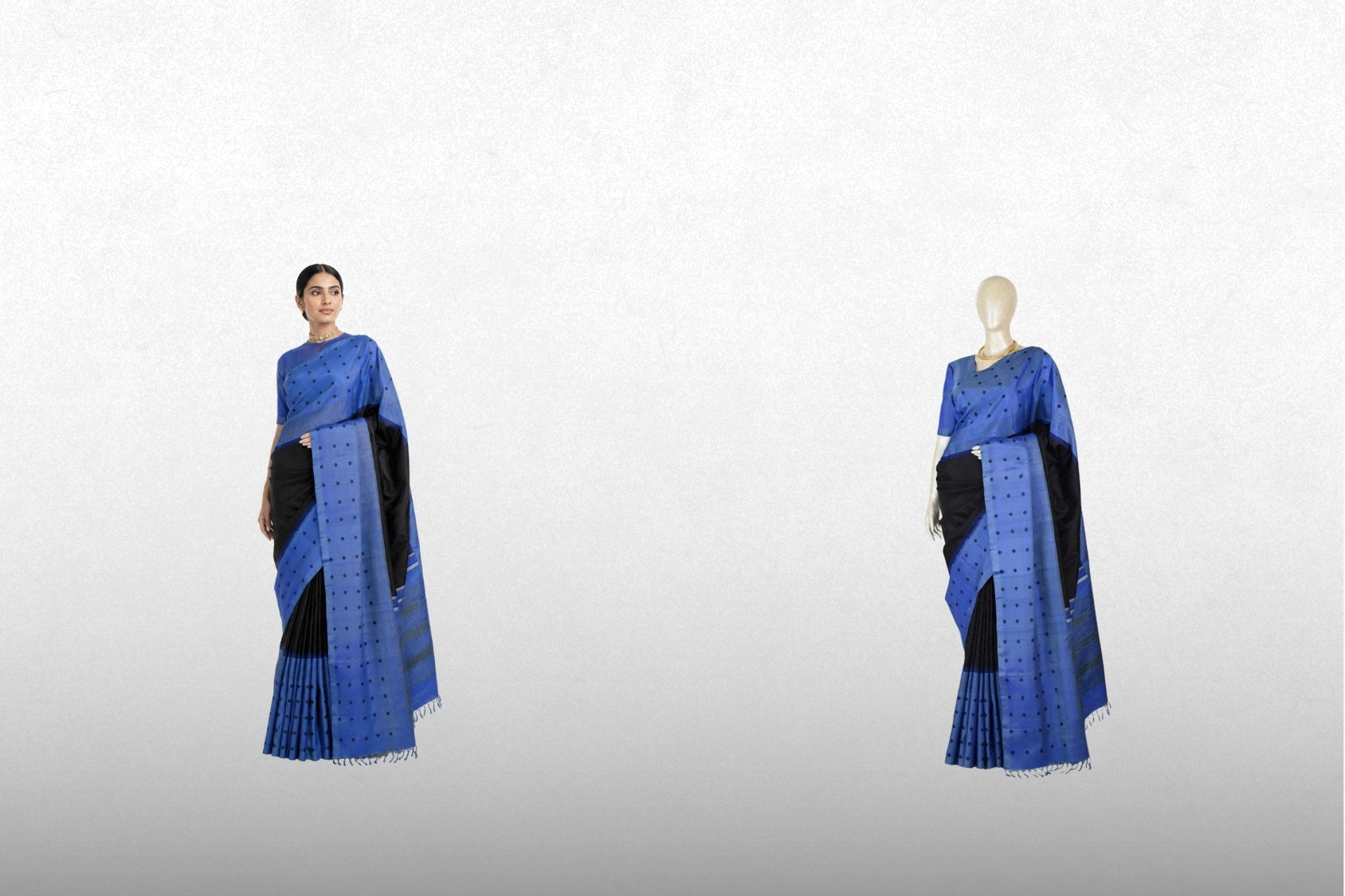
Zari, Textiles and the Changing Meaning of Value
A Historical and Contemporary Perspective for Parvai
Textiles as Social, Cultural and Material Objects
The cultural history of zari cannot be understood in isolation from the larger history of textiles in India. Historically, cloth occupied a place far beyond that of ordinary clothing. It functioned within systems of ritual, social identity, rank, exchange, inheritance, diplomacy, marriage and household economy. Fine textiles communicated region, status, community, wealth and occasion, while exceptional woven and embroidered materials were often produced within systems of royal, temple, mercantile and elite patronage. The historical sari therefore operated within a cultural system in which material, symbolism and use were deeply intertwined. It is important to recognise this because contemporary conversations about zari often isolate the precious-metal component from the social world that once gave it meaning.
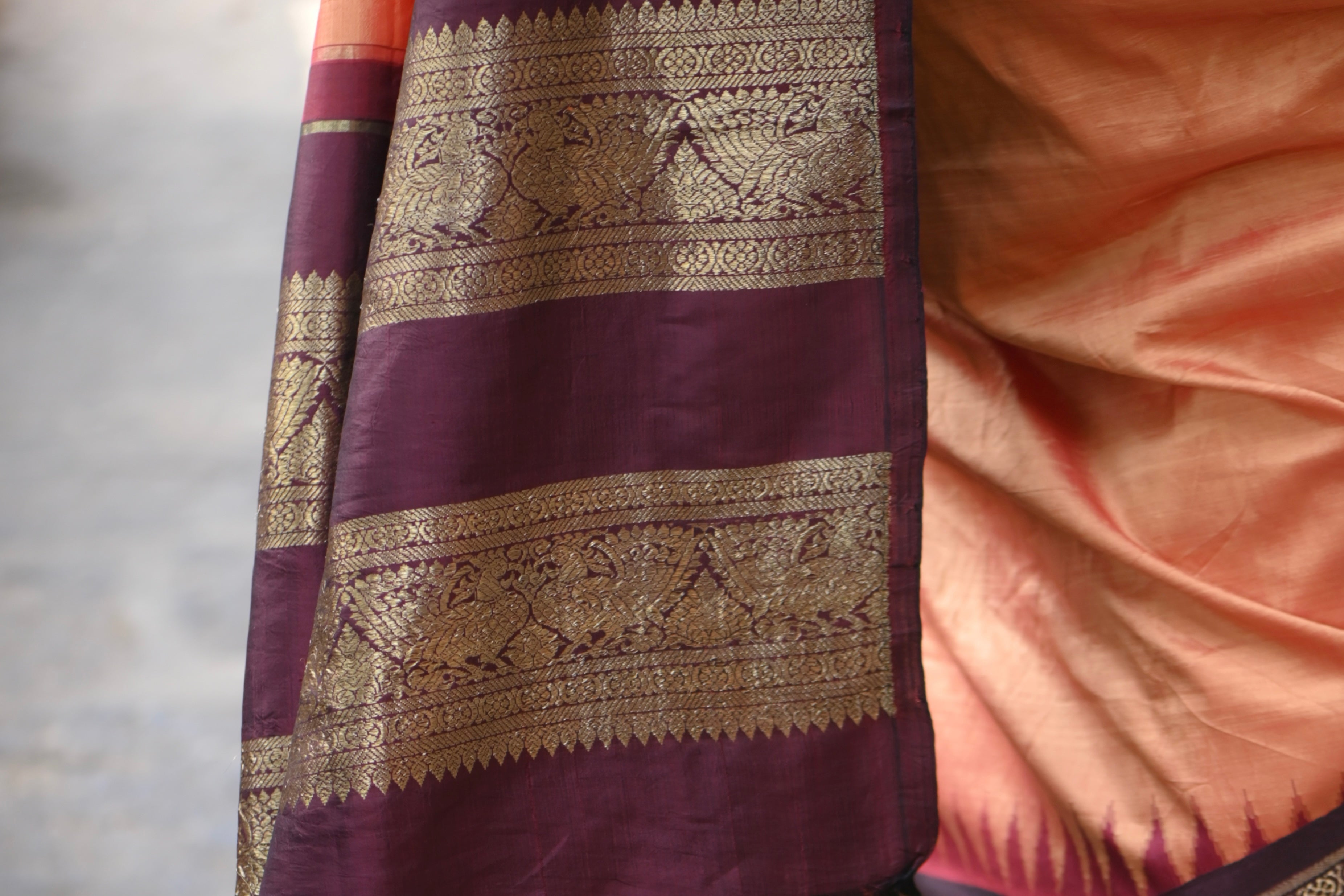
Within this earlier context, zari acquired a particular significance because gold and silver were not merely decorative. They communicated prestige, ceremonial importance and material wealth. In courtly and elite textiles, the use of metallic yarn could signal access both to precious materials and to highly specialised labour. The value of such textiles was therefore simultaneously aesthetic, symbolic and financial. A textile enriched with substantial quantities of gold or silver could possess a recoverable material value in addition to its cultural or sartorial significance. This is one of the historical reasons why real zari came to be associated with permanence, value and inheritance, particularly in important silk traditions such as Kanchipuram and Banaras.
Zari, Trousseau and Movable Wealth
The relationship between textiles and wealth was especially significant within household and marriage economies. Fine textiles, jewellery and other valuable portable possessions formed part of the material world of the family and, in many contexts, of the bridal trousseau. It would be inaccurate to reduce all historical textiles to financial assets, just as it would be inaccurate to describe them only as works of craft. Their roles overlapped. A sari could be an object of beauty, a marker of family status, a ceremonial possession, an item transferred across generations and, under difficult circumstances, something from which material value could be recovered. In periods when access to formal financial systems was limited and when women in particular often held fewer independently controlled assets, portable valuables could acquire a practical importance that is difficult to understand if one looks at the textile only through the lens of present-day consumption.
This historical reality helps explain why the idea of the zari sari as an “investment” remains emotionally powerful. Many contemporary patrons of Kanchipuram and other real-zari textiles continue to refer to old family sarees, grandmother’s collections, wedding trousseaux and vintage pieces as benchmarks of quality. Such references are culturally meaningful and often technically valuable, because older textiles preserve extraordinary evidence of colour, motif, proportion, weaving structures and finishing. The difficulty begins when the emotional continuity of the textile is mistaken for material continuity. The fact that a contemporary sari resembles an older sari in appearance does not mean that the zari, the production process, the scale of manufacture, the relative cost of precious metals, or the social function of the textile remains the same.
The Industrial Transformation of Zari
The zari industry itself has undergone substantial transformation. What was historically a specialised and relatively limited metallic-thread practice has become part of a much larger industrial and semi-industrial textile economy. Surat in particular has become a major centre of zari production, supported by mechanised drawing, flattening, electroplating, winding and other production processes. Contemporary zari may involve gold, silver, copper, silk, cotton, polyester, metallised film and other substrates depending on the category being produced. Government craft documentation now recognises a range of classifications including real zari, semi-real zari and imitation or metallised zari. This does not mean that contemporary zari is inherently inferior. It means that the material has evolved in response to scale, technology and cost, and that any serious discussion of authenticity must acknowledge this transformation.
The industrialisation of zari should therefore not be described simply as a decline from purity. It is more accurately understood as a process of adaptation. The demand for metallic ornamentation expanded while the relative cost of gold and silver increased substantially. New techniques and compositions allowed zari to continue functioning as a visual and structural material in textiles without requiring the same quantities of precious metal that were economically possible in earlier periods. In this sense, industrialisation did not destroy zari; it changed the ways in which zari could be produced and used. The result is a contemporary market in which the appearance of gold and the presence of gold are no longer necessarily equivalent, and in which the material can serve aesthetic, technical and ceremonial functions without always carrying significant intrinsic wealth.
Regulation, Inflation and Changing Standards
This distinction becomes especially important when examining government regulation. The Government Order shared with Parvai, G.O. (Ms.) No. 198 dated 10 December 2025, provides a clear and contemporary example of the way officially recognised zari specifications have changed in response to economic conditions. The Order records that the gold component had earlier been reduced from 0.6% to 0.5%, with a permitted tolerance of ±0.02%, while silver had been reduced from 57% to 40%, with a tolerance of ±2%. The 2025 directive then authorised a further reduction to 0.4% gold, again with a tolerance of ±0.02%, and 30% silver with a tolerance of ±2%. zari combination new GO 198.pdf These figures are important because they demonstrate that even within officially regulated frameworks, zari composition is not historically fixed.
The reasoning behind the 2025 directive is perhaps even more significant than the percentages themselves. The Order refers to the sharp rise in gold and silver prices, the consequent increase in the price of silk sarees, the impact on sales and the need to support the economic viability of the handloom sector. zari combination new GO 198.pdf This establishes a crucial point for any contemporary discussion of authenticity: the preservation of a textile tradition cannot be separated from the economic conditions under which it is produced and purchased. When precious-metal costs become disproportionately high, insisting on an older composition may not preserve the craft at all. It may instead reduce demand, narrow the patron base and place pressure on the very weaving communities one wishes to sustain.
The directive also shows that reduced precious-metal content need not imply reduced standards. The 2025 Order retains the requirement for testing and verification of the revised composition through appropriate accredited laboratories. zari combination new GO 198.pdf This is an important distinction. The contemporary requirement is not that every sari reproduce the metallic composition of a previous era, but that the material used be represented honestly and verified where necessary. Transparency therefore becomes more meaningful than nostalgia. A lower precious-metal specification, clearly declared and correctly tested, is not inherently a lesser material choice. Misrepresentation is the real problem.
The Limits of 2G, 3G and Similar Classifications
This historical and regulatory background exposes the limitations of contemporary market classifications such as 2G, 3G and similar labels when they are used as shorthand for the quality of an entire textile. Such terms may be useful if they correspond to a specific supplier composition or test result, but they cannot adequately measure textile quality. They do not reveal the quality of the silk, the complexity of the loom preparation, the density of the motifs, the difficulty of the border construction, the quality of the reverse, the sophistication of the pallu, the number of supplementary-weft interventions, or the experience of the weaving team. They describe, at most, a material characteristic of one component. The danger begins when this narrow specification becomes a hierarchy through which the whole textile is judged.
This is particularly visible in Kanchipuram, where zari carries enormous cultural and emotional importance. Yet the identity of a Kanchipuram sari has never depended upon zari alone. Its technical character is shaped by its silk structure, contrast borders, korvai interlocking, petni pallu construction, traditional motifs, checks, stripes, loom practices and the accumulated knowledge of the weaving community. A change in the silver or gold percentage of the zari does not erase these characteristics. The Government’s willingness to revise composition in response to economic conditions while continuing to recognise and regulate the textile demonstrates precisely this point. Material standards may evolve, while the technical and cultural identity of the textile continues.
Material Value and Textile Value
For Parvai, the deeper issue is the distinction between material value and textile value. Material value is relatively easy to calculate because gold, silver, silk and zari all have market prices. Textile value is more difficult to quantify because it includes time, knowledge, technical mastery, design intelligence, structural complexity, rarity and human judgement. The ability of a master weaver to resolve a difficult join, interpret a historical motif, maintain tension across a complicated structure or spend several additional weeks refining a pallu does not have a daily quoted market price. This creates an imbalance in the way value is perceived. The cost of silver is visible and easily measured, while the value of accumulated skill is less visible and therefore often less easily defended.
This imbalance can result in commodity inflation being mistaken for increased craft quality. A sari can become more expensive solely because silver has risen in price, without any change in weaving complexity, labour time or design sophistication. If the market then assumes that the more expensive sari is automatically the better sari, the rise in the cost of a raw material is being confused with an improvement in the textile. The 2025 Government directive implicitly acknowledges this problem by recognising that rising metal prices can make silk sarees less affordable and affect sales even when the craft itself has not changed.
Affordability and the Sustainability of Craft
The question of affordability therefore belongs within the cultural discussion, not outside it. Affordability should never mean lowering weaving standards, using poor yarn or suppressing wages. Fine handwoven textiles require good materials, careful preparation, specialised labour and appropriate remuneration. At the same time, a living craft requires patrons. If the highest possible precious-metal specification becomes the only accepted definition of authenticity, rising commodity prices will steadily narrow the market for good work. This can create a situation in which the metal is protected at the expense of the loom. A more sustainable approach is to recognise that different textiles can legitimately occupy different material and price positions while retaining high standards of craft, provided that their composition is clearly disclosed.
The comparison with the past becomes especially problematic when contemporary patrons expect modern sarees to function financially in the same way as historical textiles. The economic environment has changed substantially. In earlier periods, valuable clothing and jewellery could form part of the movable wealth of a household. Today, most patrons who wish to hold gold or silver as an investment have access to far more direct financial mechanisms. Clothing is generally purchased for personal use, pleasure, identity, ceremony, design and cultural attachment rather than as a primary form of financial security. To continue judging a contemporary handwoven sari principally by the amount of recoverable metal it contains is therefore to apply the economic logic of one historical period to the consumer culture of another.
From Scarcity to Abundance
The broader clothing economy has also changed dramatically. Modern consumers live within an environment of abundance, rapid production and frequent purchase. Industrialisation and globalised supply chains have made clothing widely available and relatively disposable. This is almost the opposite of a historical household economy in which garments were acquired less frequently, used for longer periods, repaired, repurposed, circulated and inherited. The contemporary fascination with “vintage” and “heirloom” textiles therefore exists within a culture that often consumes clothing far more rapidly than previous generations did. This contradiction deserves attention. It is possible to romanticise the material richness of old textiles while simultaneously participating in a market structure that gives clothing far less longevity.
What may be worth recovering from the past is therefore not simply the higher precious-metal content of certain textiles, but the culture of patronage that made difficult work possible. Historically, highly specialised textiles survived because royal courts, temples, merchants, elite households and other patrons were willing to finance the materials, labour and time required to produce them. It would be inaccurate to describe all such patronage as social responsibility in the modern ethical sense, because historical patronage operated within very different systems of power and status. Nevertheless, it created economic conditions in which mastery could survive. Patrons were prepared to pay for complexity, and this is perhaps the more relevant lesson for the present.
Patronage in the Contemporary Age
Contemporary society has far greater access to information, communication and craft knowledge than earlier generations could have imagined. Patrons can see looms through digital media, learn about techniques, communicate directly with makers and understand production processes in unprecedented detail. Yet awareness alone does not sustain craft. Patronage does. If highly skilled work could survive under conditions of scarcity and limited communication, there is a strong argument that a society characterised by greater abundance, connectivity and discretionary consumption should be capable of supporting it at least as effectively. The challenge is to redirect attention away from the easiest measurable component and towards the full architecture of making.
This is also where contemporary revival culture deserves closer scrutiny. The language of vintage revival, grandmother’s sarees and archival references is often valuable because it draws attention to historic motifs, colours and structures. But the revival of appearance should not be confused with the recreation of an entire historical economy. We cannot reproduce the social conditions, production scale, metallic compositions, labour structures and financial functions of another period merely by reproducing the design of an old sari. A serious revival must therefore decide what it wishes to preserve: the motif, the construction, the weaving technique, the material specification, the cultural memory, or some combination of these. Not everything from the past can or should be reproduced unchanged.
Reconsidering the Meaning of the Heirloom
This is where the contemporary meaning of the heirloom deserves reconsideration. Historically, heirloom value could include recoverable material wealth. Today, it may be more meaningful to understand an heirloom as an object that another generation considers worthy of preservation because of its technique, design, provenance, rarity, cultural meaning or emotional significance. A textile with a more moderate zari specification may therefore have greater long-term importance than a poorly made textile containing more precious metal. Gold and silver can be purchased again. A specialised weaving technique, once lost, may not be recoverable so easily.
The idea of an heirloom can therefore expand from material inheritance to knowledge inheritance. A sari can carry the knowledge of a weaving family, the memory of a regional technique, a historic motif vocabulary, a particular construction method or hundreds of hours of skilled labour. In this sense, the long-term cultural value of the textile may lie less in what can be extracted from it and more in what has been preserved within it.
Parvai’s Position
For Parvai, the most useful position is therefore not to reject real zari, higher zari grades or material value, but to place them within proportion. Zari should be accurately described, honestly represented and tested where necessary. Patrons who prefer a particular specification should be able to choose it knowingly. At the same time, the sari should be evaluated as a complete textile, with attention to yarn quality, construction, technique, motif complexity, finishing, time, maker knowledge and remuneration. The larger cultural shift that is needed is from a hierarchy based primarily on precious-metal content towards a more complete understanding of textile value.
The history of zari ultimately shows that materials change because societies change. The economic function of clothing changes. The scale of manufacture changes. Government standards change. Consumer behaviour changes. What need not change is the commitment to excellence, integrity and knowledge. The meaningful continuity between an old textile and a contemporary one should not necessarily be the exact percentage of silver contained in the yarn. It may instead be the seriousness with which the textile is conceived, made, understood and supported.
What the Past Can Teach the Present
For Parvai, this is perhaps the most important lesson from the past. The purpose of revival should not be to reproduce history mechanically, but to understand what made the historical object valuable in the first place. Precious metal was part of that value, but so were skill, patronage, rarity, time and the willingness of society to support difficult work. In the contemporary context, where clothing is no longer primarily a form of movable wealth and where zari itself has become technologically and industrially transformed, the deeper responsibility is to preserve the quality of making.
The real cultural continuity lies not in insisting that every contemporary textile recreate the material economy of its historical predecessor, but in maintaining the conditions under which exceptional work can still be made. That means valuing time, knowledge, technical excellence, material honesty and the people who hold these traditions. If earlier generations, living with far greater scarcity and fewer means of communication, found ways to support difficult textile traditions, then a society with greater abundance, awareness and access should be capable of doing at least as much. The question for the present is therefore not only how much gold or silver remains in the cloth, but whether we still know how to recognise, value and sustain the quality of the work itself.


Written by Effie Thomas