Sidra
SIDRA I
Handwoven Silk-Cotton Chanderi | 1,024 Buttas
The Textile
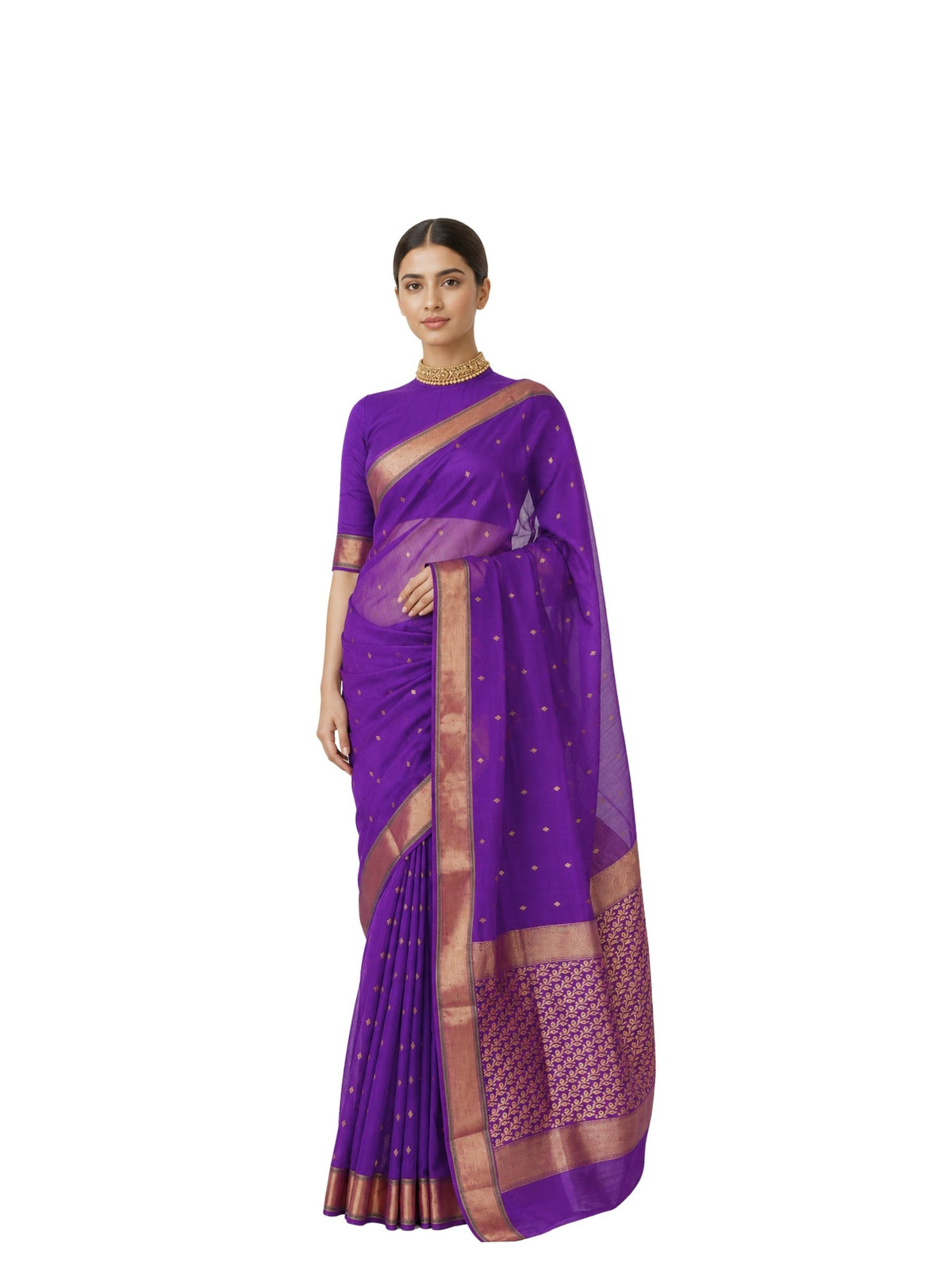
Sidra is an exploration of the refinement possible within the Chanderi handloom tradition, bringing together fine materials, restrained geometry and the extraordinary precision of hereditary weaving knowledge. Woven in Chanderi, Madhya Pradesh, the sari uses pure two-ply silk resham in the warp and fine pure 100s-count cotton in the weft, producing a textile of remarkable lightness, translucency and fluidity.
The Body, 1,024 Buttas
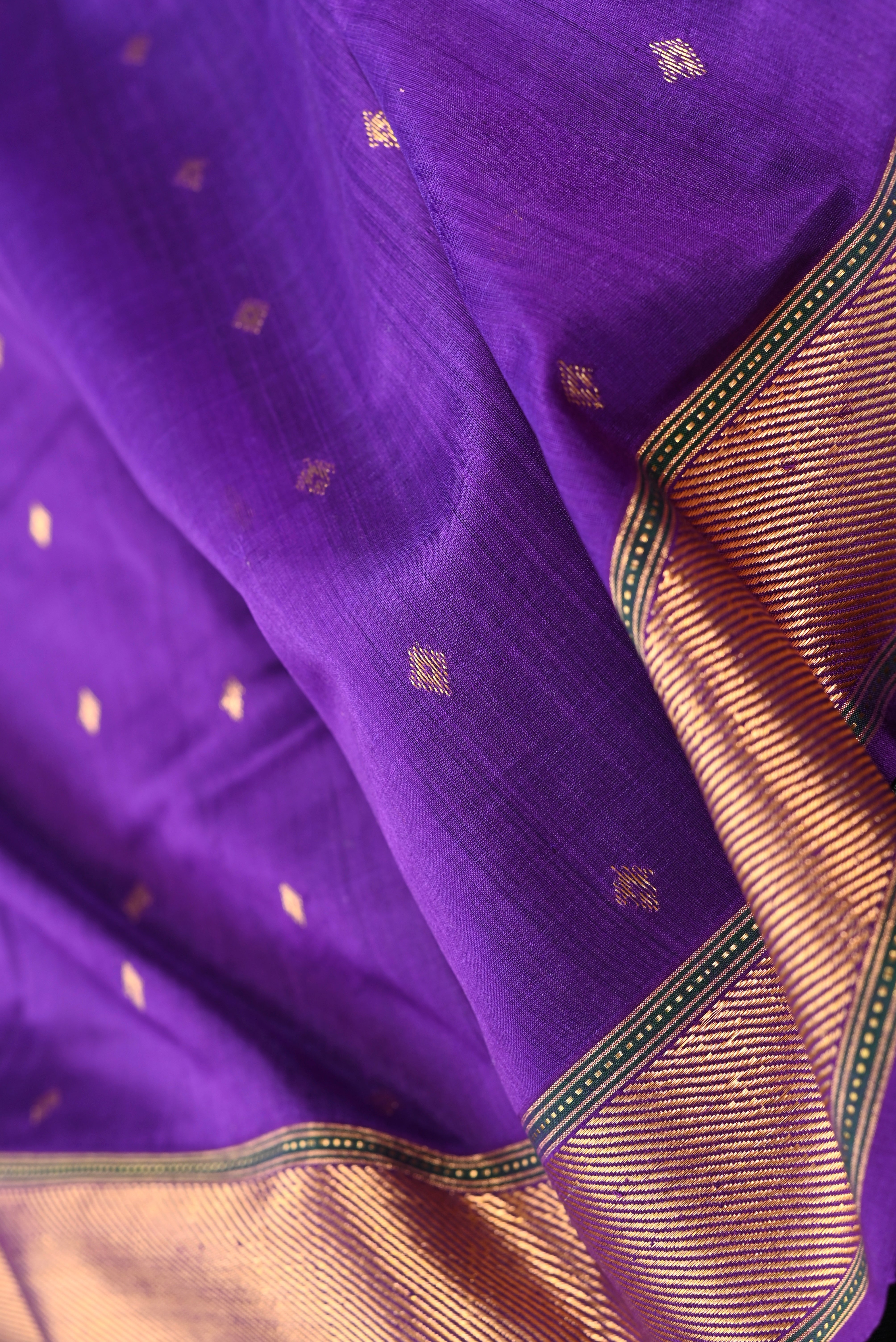
Against the deep, luminous purple ground are 1,024 individually woven diamond buttas, distributed rhythmically across the body. Small and finely articulated, the motifs catch the light almost like distant stars, creating richness without compromising the visual restraint characteristic of Chanderi. The repetition is deliberately disciplined, allowing the beauty of the weave itself to remain visible beneath the ornamentation.
The Border & Pallu
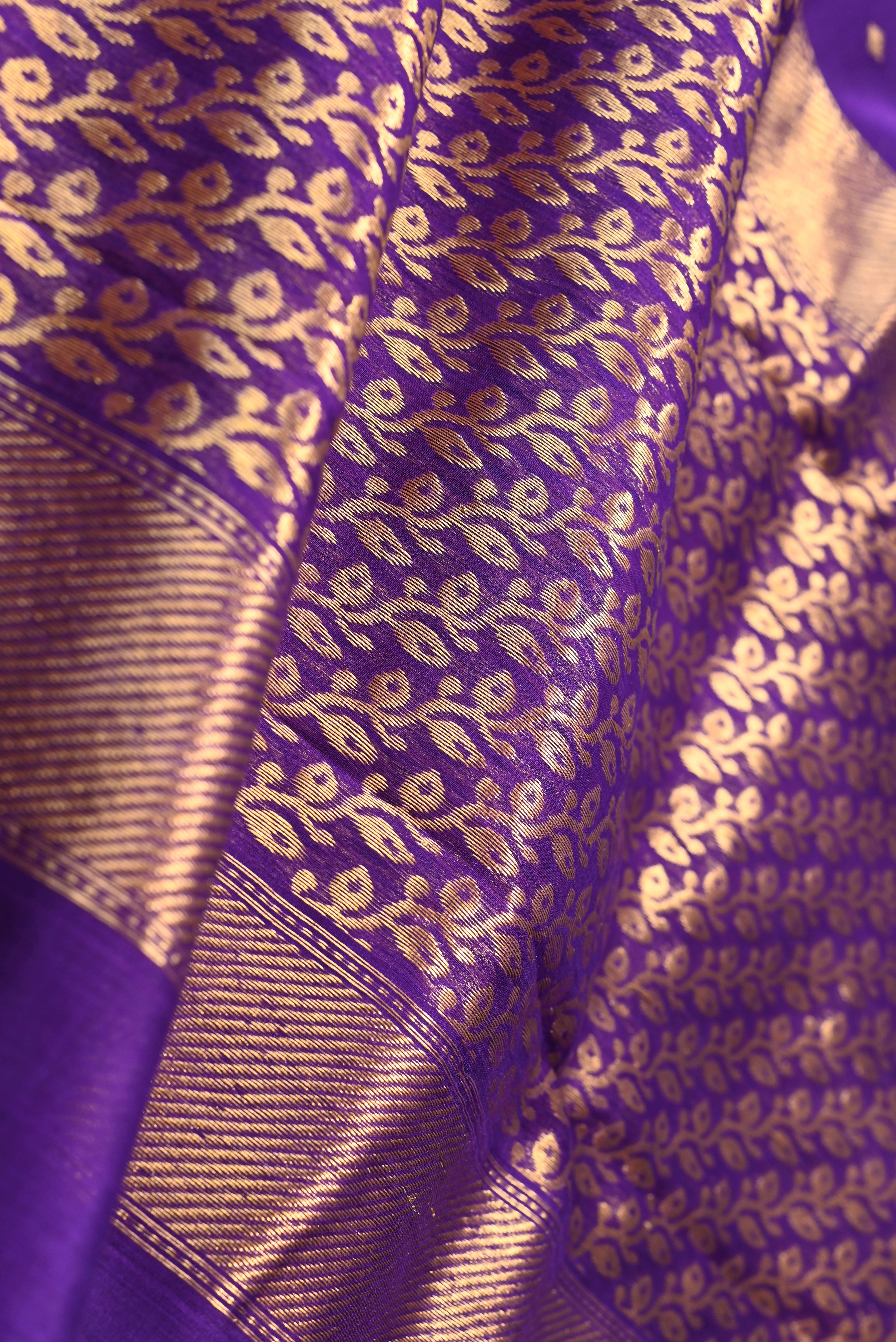
The body is framed by a traditional twill-woven band in gold zari, delicately accented with green, introducing a subtle interplay of colour, texture and geometry. The sari culminates in an elaborate pallu where diagonal creeper motifs create a sense of movement. The flowing botanical vocabulary of the pallu forms a considered counterpoint to the ordered geometry of the diamond buttas.
The Weavers & Their Heritage
Sidra is woven by Baseema Ansari and his wife, Saahistha Ansari, who work together at a single loom. The Ansaris belong to a long-established community of hereditary Muslim weavers whose contribution to the textile traditions of the Indian subcontinent extends across several centuries, with generational weaving knowledge associated with important centres including Chanderi, Banaras, Kota and other regions of Rajasthan and North and Central India.
The Making
Working together for approximately twelve hours each day, Baseema and Saahistha require around twelve days at the loom to complete a single Sidra I. The 1,024 buttas are therefore more than elements of ornamentation; collectively, they are a record of repeated acts of concentration, dexterity and accumulated knowledge. The finished sari brings material, design and human labour into a single woven expression, allowing the process of its making to become an intrinsic part of its value.
Read more on The Parvai Perspective
Choose options
Care & Product Notes
A few things we would like you to know
Care
Air your Parvai sari after wear and store it in a clean cotton or muslin cover, away from direct sunlight, moisture and plastic. Refold it from time to time so that the same creases do not remain under stress, especially along zari-rich borders and pallus. Heavier saris are best stored folded or gently rolled rather than hung for long periods. Clean only when necessary, preferably through a trusted specialist familiar with fine silk and handwoven textiles.
Handwoven Character
Every Parvai textile is handmade and may carry slight variations in weave, texture, colour, motif placement, finish or dimensions. These are natural to the making process and are part of the textile’s character, not defects. Measurements and weights are approximate.
Colour
Colours may appear differently across devices due to variations in screen brightness, resolution, colour settings and lighting. If you would like a closer colour reference or any clarification before purchase, please contact us.
Questions
We are always happy to speak about the textiles we make. WhatsApp us at +91 73585 50888.